Launch offer — valid today only

The SVOP Course and Exam, One Drawing per Concept With Every Rule Drawn Step by Step!

Lights, give-way and stand-on, buoys, charts, compass error, stability, anchoring, weather warnings and distress calls: in the manual it's a wall of text. Here each topic fits on one page, with the drawing and what you need to remember. 58 illustrated pages.

I WANT TO STUDY IT WITH DRAWINGS

🔒 Secure checkout · PDF by email · 30-day guarantee

One topic per pagethe drawing shows you the rule and the text backs it up
58 illustrated pages9 parts, from the SVOP exam to exam day
Up-to-date sourcesTP 14692, Collision Regulations and Canada Shipping Act, 2001

This Is What the Pages You Will Study Look Like

One topic per page, the drawing that shows you how it works and the boxes with what you need to know:

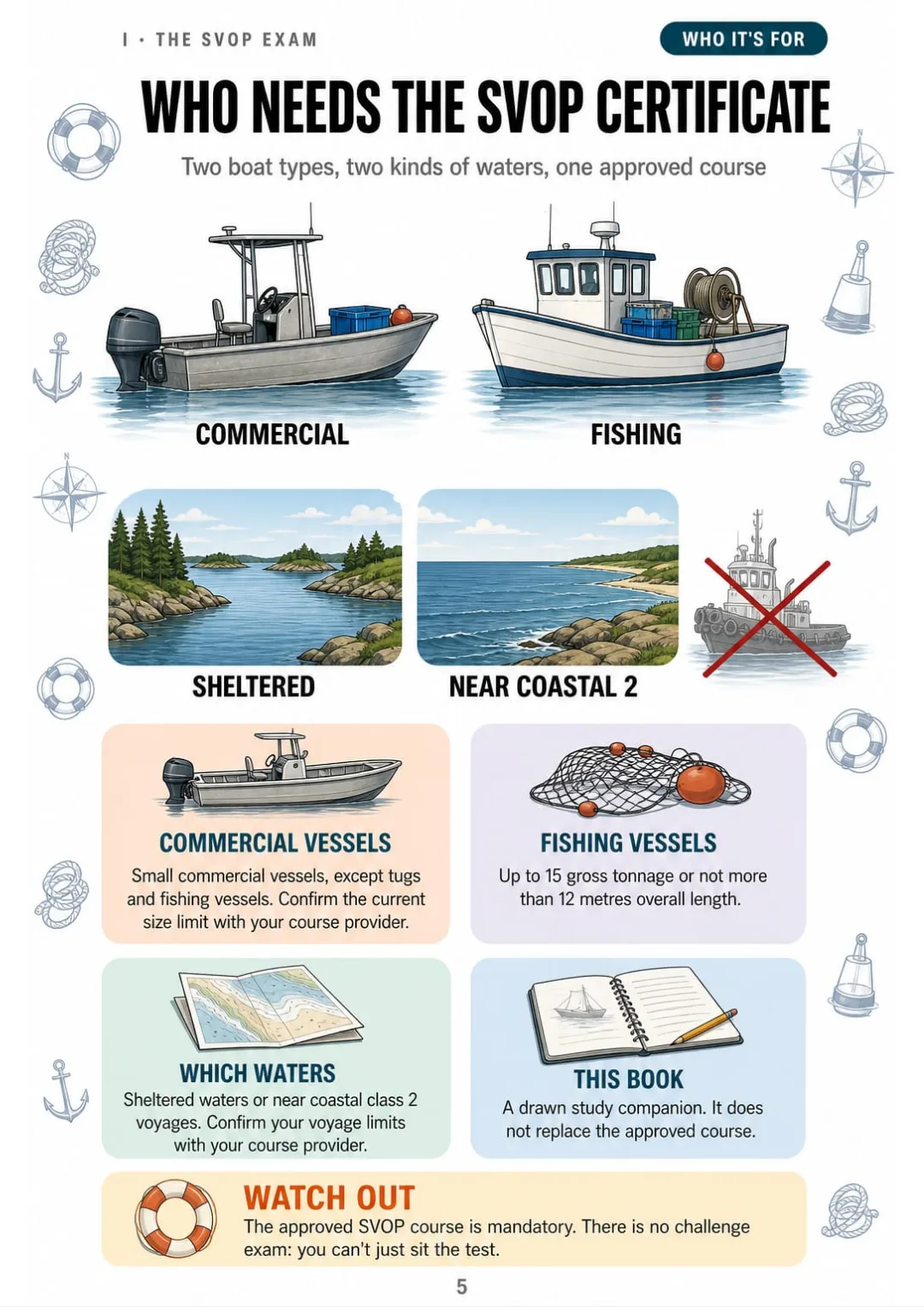
Who needs the SVOP: small commercial vessels and fishing vessels, sheltered or near coastal class 2 waters.
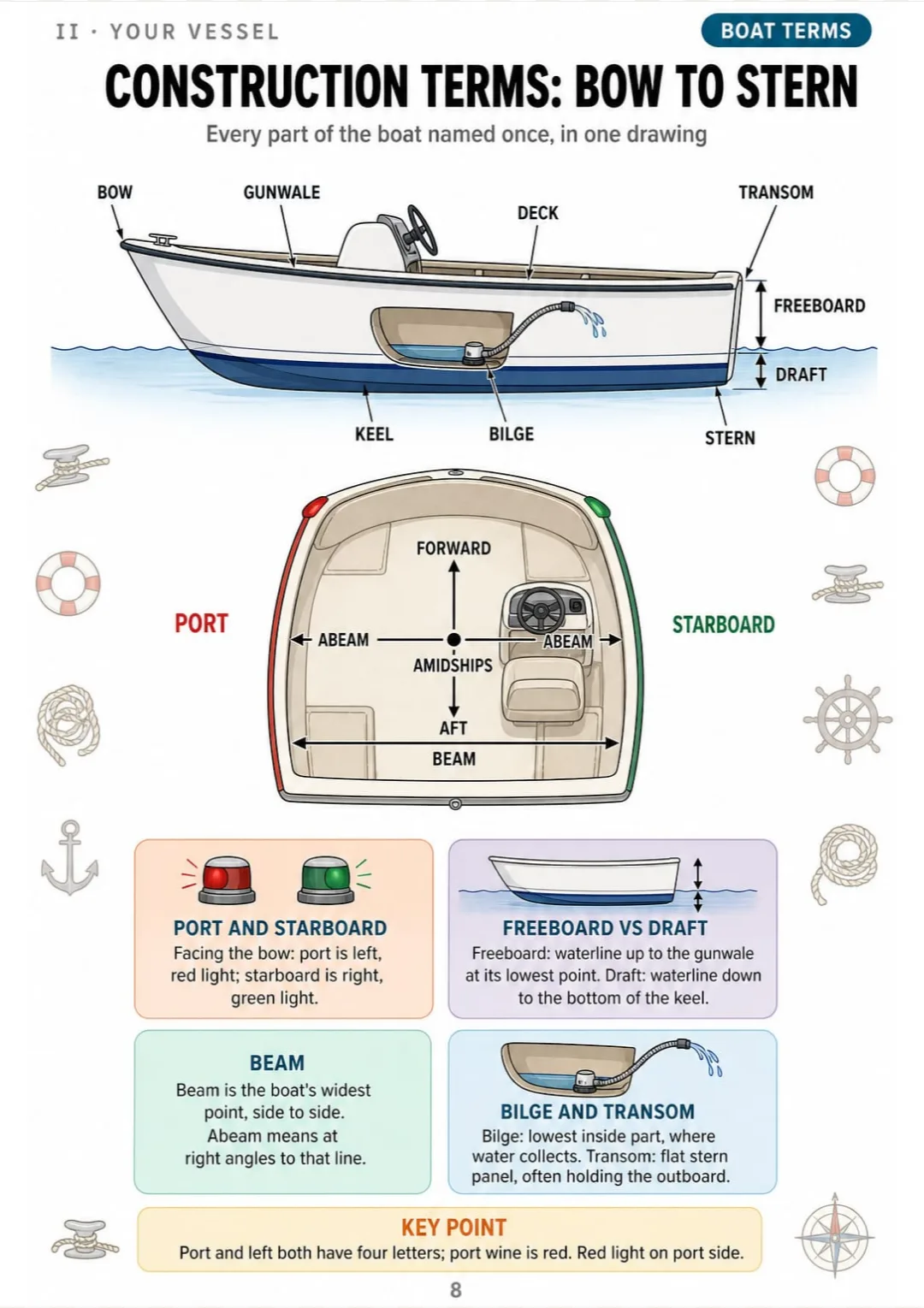
Bow, stern, port, starboard, beam, freeboard, draft: all labeled on one boat.
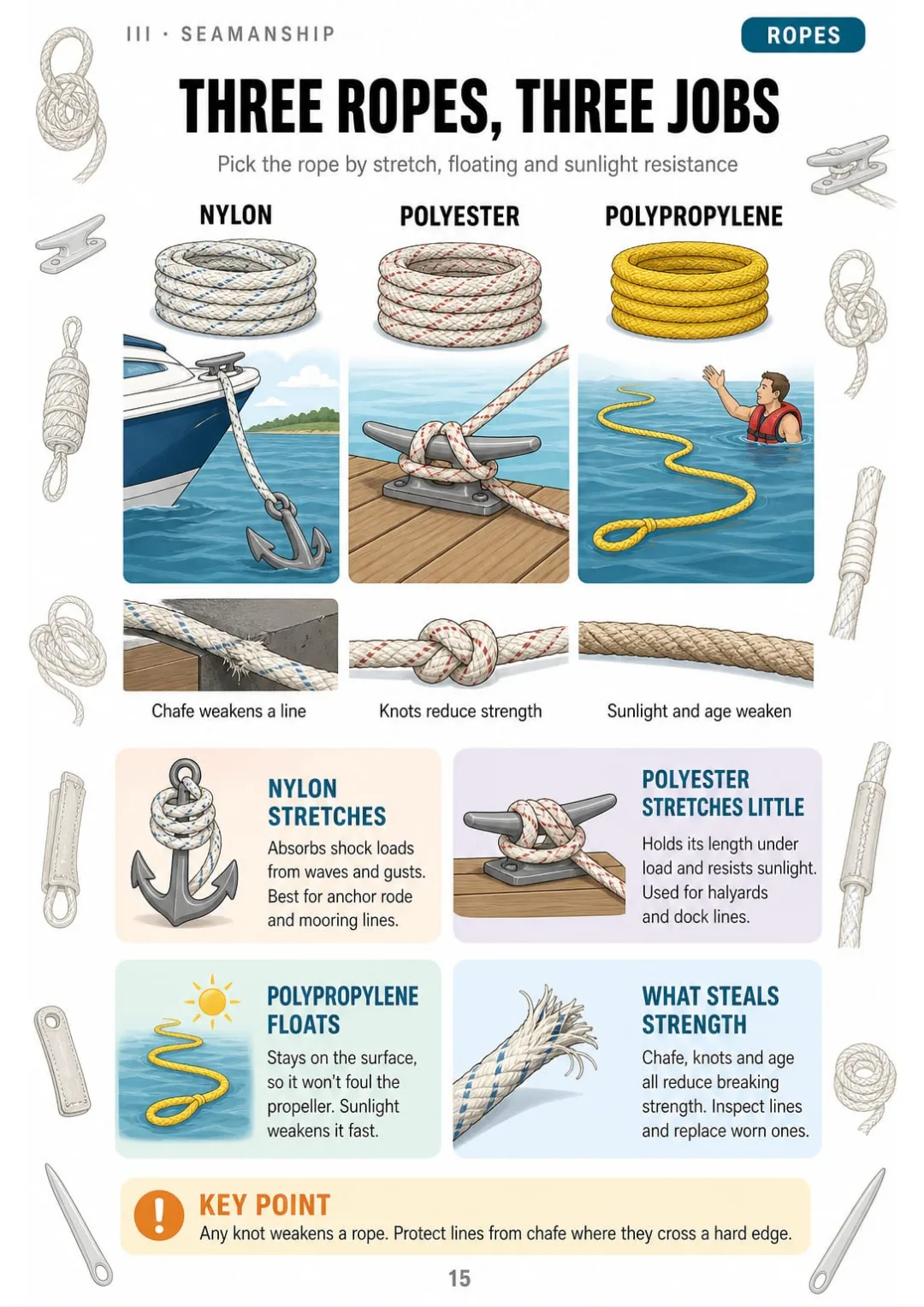
Nylon for anchoring, polyester for dock lines, polypropylene for heaving lines
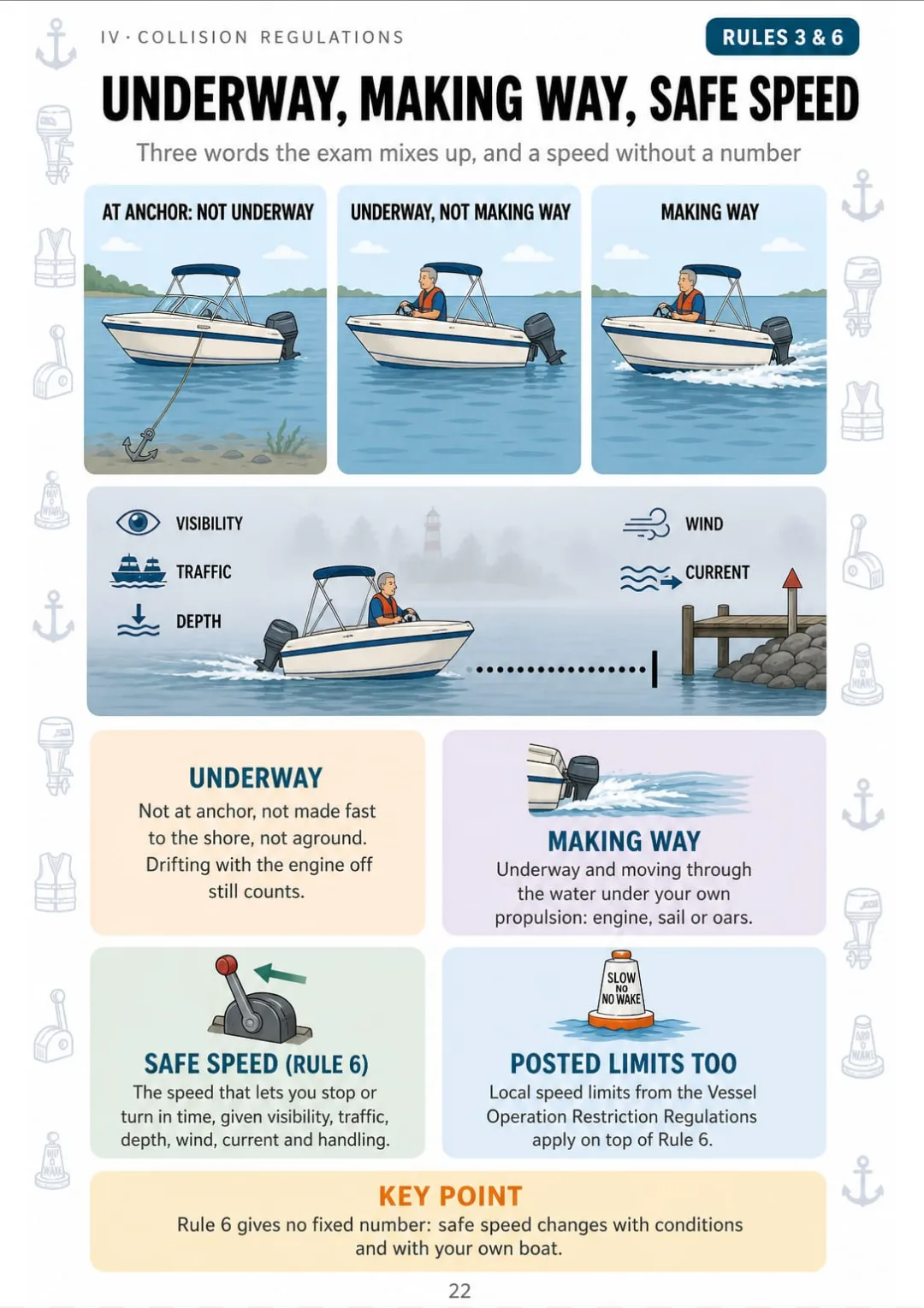
Underway = not anchored, moored or aground · Safe speed has no fixed number
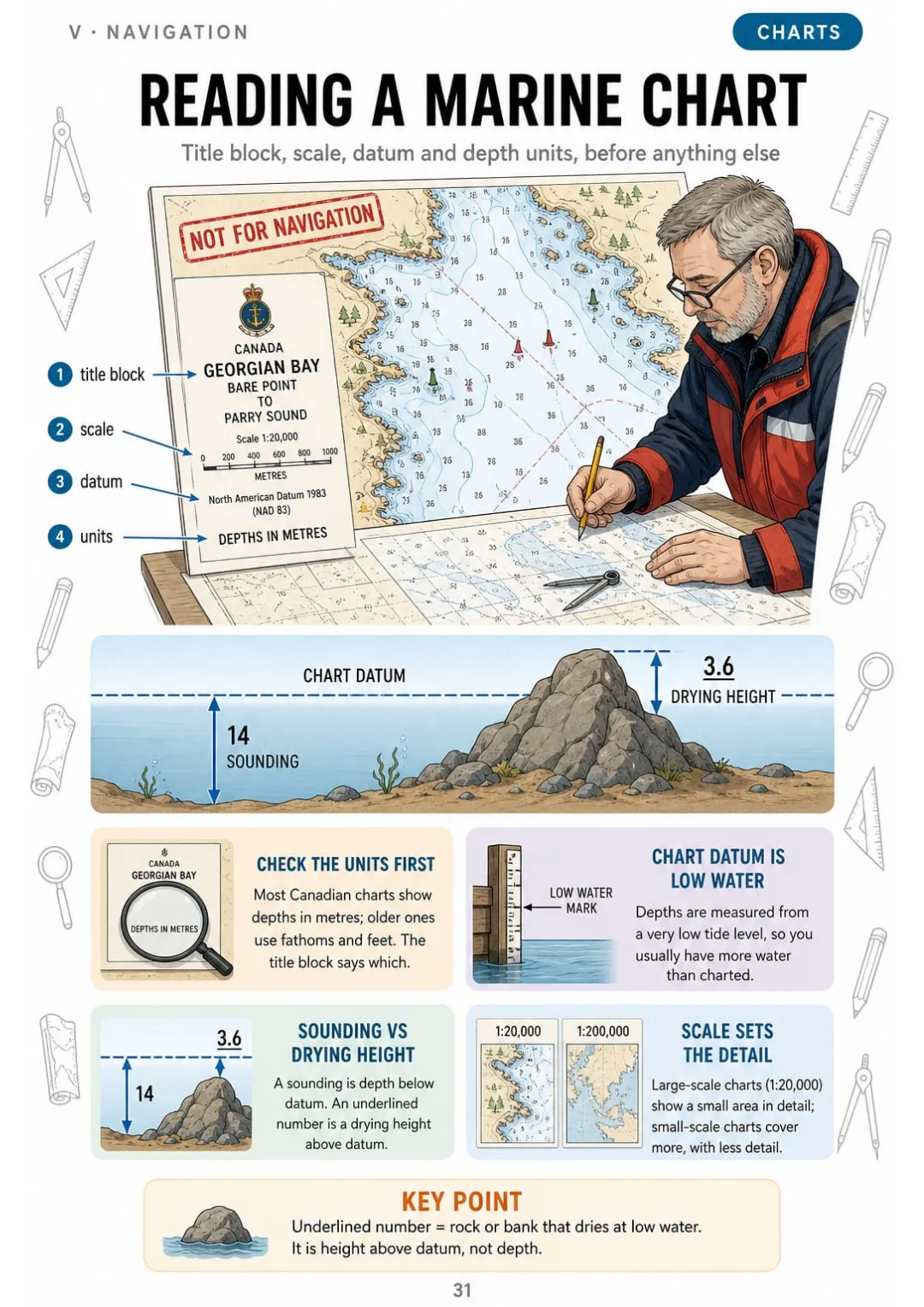
Chart datum is a low-water level: soundings below it, underlined drying heights above it.
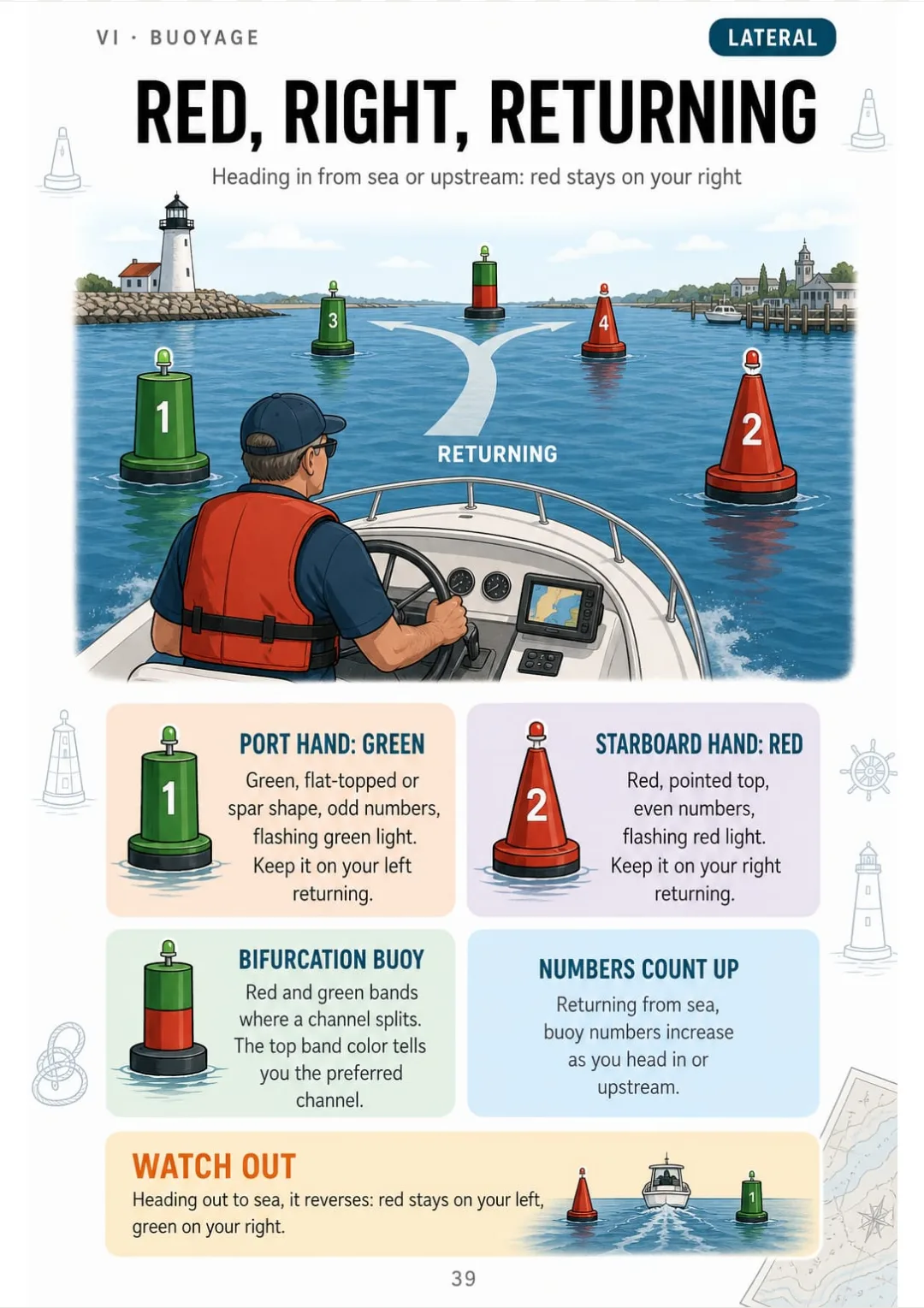
Returning: red, pointed, even numbers on your right; green, flat-topped, odd numbers on your left.
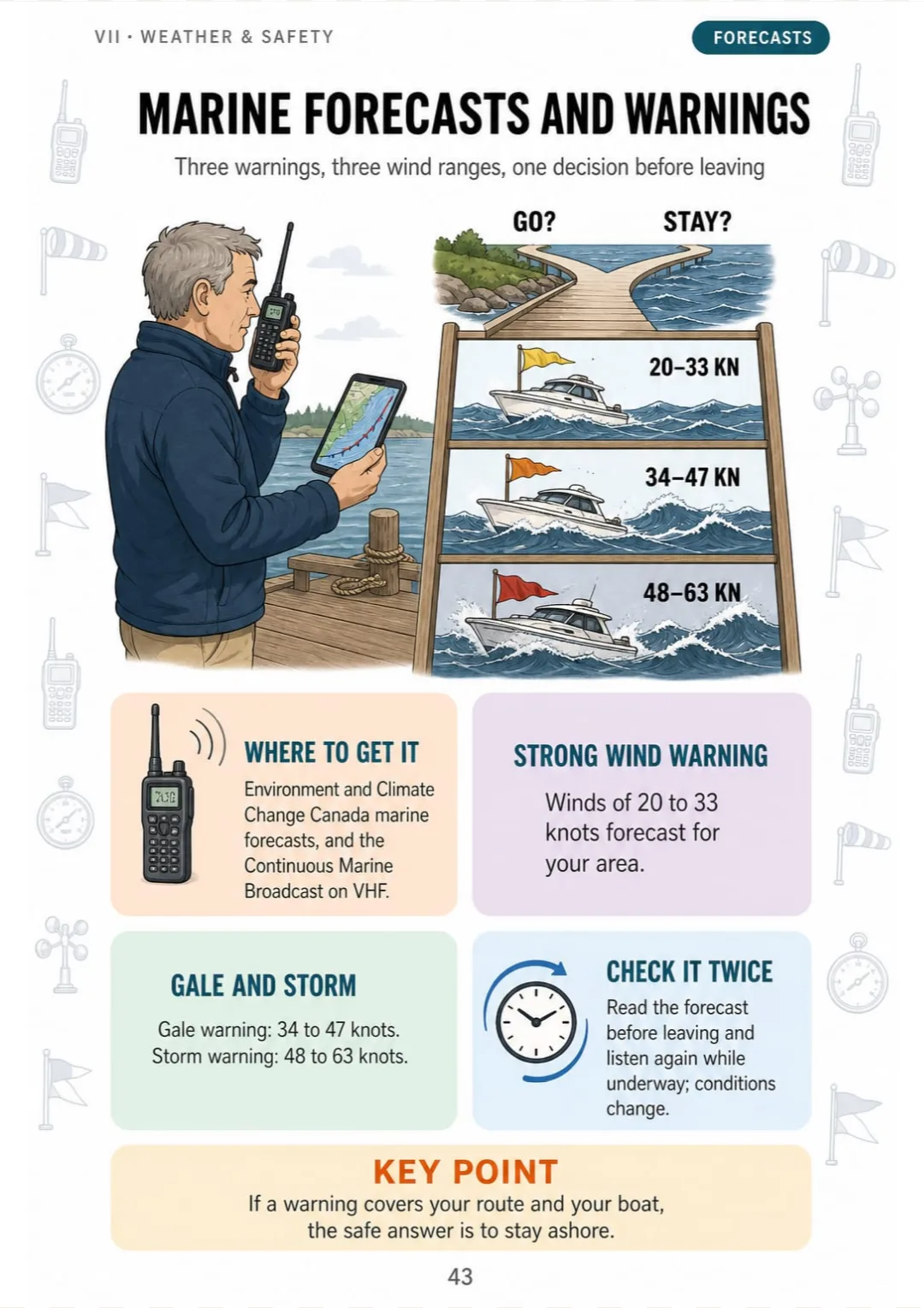
Strong wind 20–33 kn · Gale 34–47 kn · Storm 48–63 kn
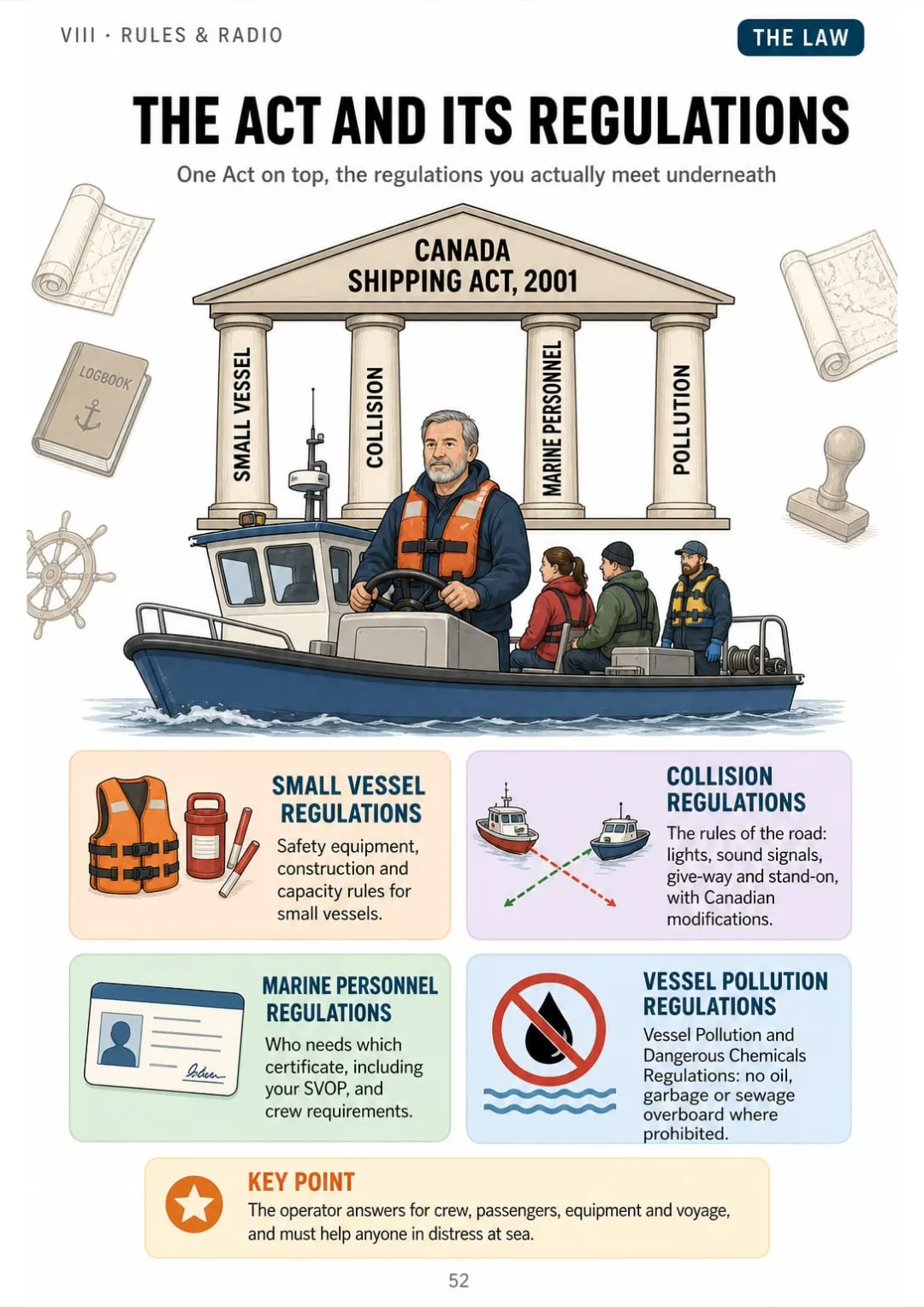
The Canada Shipping Act, 2001 as the roof over four regulations every operator meets.

Swipe to see more →

These are real pages from the book. The table of contents is the full one: 9 parts and 54 topics.

Nobody Ever Put It in Order for You.

You've read three times who gives way when two boats cross. You close the manual...

...and on paper you no longer know if you stand on or give way. It was just lines of text.

Nylon for anchoring, polyester for dock lines, polypropylene for heaving lines

Here it's one page, two power-driven boats drawn from above: the one that has the other on her starboard side gives way. The other holds course and speed.

And on the pages next to it every situation has its own: head-on, overtaking, the lights you'll meet at night, sound signals, the lateral buoys and the forecast warnings.

First you understand why each boat does what it does. Then remembering who gives way takes care of itself.

SEE THE DIFFERENCE

Stop memorizing rules you can't picture:

THIS
  • Pages and pages of dense text
  • Boat terms without a single drawing
  • On exam day, you don't know where to start
Rule 15 – Crossing situation. When two power-driven vessels are crossing so as to involve risk of collision, the vessel which has the other on her own starboard side shall keep out of the way and shall, if the circumstances of the case admit, avoid crossing ahead of the other vessel. Rule 17 – Action by stand-on vessel. Where one of two vessels is to keep out of the way, the other shall keep her course and speed. The latter vessel may, however, take action to avoid collision by her manoeuvre alone, as soon as it becomes apparent to her that the vessel required to keep out of the way is not taking appropriate action in compliance with these Rules.
FOR THIS
  • Every term drawn on the boat
  • One topic per page, with the rules in boxes
  • You remember it because you've seen it
Bow, stern, port, starboard, beam, freeboard, draft: all labeled on one boat.
CONTENTS

Take a Look at the 9 Parts and 54 Topics

The SVOP exam, your vessel, seamanship, collision regulations, navigation, Canadian buoyage, weather and emergencies, rules and radio, and the final review: 58 pages, all drawn

IThe SVOP Exam · pp. 5-7
  1. Who Needs the SVOP Certificate
  2. The Course, the 50-Question Exam and the 70% Pass Mark
  3. Pleasure Craft vs Commercial Vessel
IIYour Vessel · pp. 8-14
  1. Construction Terms: Bow to Stern
  2. Displacement vs Planing Hulls
  3. Hull Types: Open, Enclosed, Inflatable, Catamaran
  4. Outboards, Stern Drives, Inboards and Jets
  5. Engine Start, Shutdown and Alarms
  6. Stability: Centre of Gravity and Buoyancy
  7. Loading, Free Surface and Capsizing
IIISeamanship and Manoeuvring · pp. 15-21
  1. Rope Types and Their Limits
  2. Knots, Bends and Hitches
  3. Mooring Lines and Fenders
  4. Turning Circle and Propeller Effects
  5. Wind and Current When Docking
  6. Choosing and Setting an Anchor
  7. Riding at Anchor and Weighing Anchor
IVCollision Regulations · pp. 22-30
  1. Underway, Making Way and Safe Speed
  2. Lookout and Risk of Collision
  3. Stand-On vs Give-Way
  4. Head-On, Crossing and Overtaking
  5. Navigation Lights on Small Vessels
  6. Lights You Will Meet: Towing, Fishing, Anchored
  7. Sound Signals and Shapes
  8. Restricted Visibility
  9. Radar Reflectors
VNavigation · pp. 31-38
  1. Reading a Marine Chart
  2. Chart Symbols and Depths
  3. Latitude, Longitude and Distance
  4. The Magnetic Compass: Variation and Deviation
  5. Taking a Bearing and Steering a Course
  6. GPS and Electronic Position
  7. Radar Basics for Small Vessels
  8. Planning a Voyage with Charts and Publications
VIThe Canadian Buoyage System · pp. 39-42
  1. Lateral Buoys: Red, Right, Returning
  2. Cardinal Buoys
  3. Special and Information Buoys
  4. Lights on Buoys and Daybeacons
VIIWeather, Safety and Emergencies · pp. 43-51
  1. Marine Forecasts and Warnings
  2. Wind, Waves and Fog
  3. Safe Working Practices on Deck
  4. Emergency Equipment by Vessel Size
  5. Person Overboard Recovery
  6. Fire, Flooding and Abandoning the Vessel
  7. Distress Signals
  8. Search and Rescue in Canada
  9. Pollution Prevention
VIIIRules, Departure and Radio · pp. 52-56
  1. Canada Shipping Act, 2001 and the Regulations
  2. Departure Checklist
  3. The ROC-M: VHF Radio Basics
  4. Distress, Urgency and Safety Calls
  5. DSC and the Mayday Procedure
IXFinal Review and Exam Day · pp. 57-58
  1. Frequent Mix-Ups, Side by Side
  2. Exam Day Checklist

What If Every Topic Fit on a Single Page?

Picture this:

Instead of rereading half a page about lateral buoys without being able to see them...

...you open the page and find the channel drawn the way you see it from the helm: red, pointed, even numbers on your right; green, flat-topped, odd numbers on your left.

Chart datum is a low-water level: soundings below it, underlined drying heights above it.

And navigation lights, crossing situations, compass error, stability and distress calls turn into drawings and tables you read at a glance.

You stop repeating and start understanding.

That's exactly what The SVOP Sketchbook does. It's not “just another manual.” It's 9 parts and 54 drawn topics, and at the end the frequent mix-ups side by side and an exam day checklist.

Because what your brain sees organized, it remembers.

Here Is What You Get with The SVOP Sketchbook:

Ipp. 5-7

The SVOP Exam

Who needs the SVOP certificate, how the course and the 50-question exam work, the 70% pass mark, and pleasure craft vs commercial vessel.

IIpp. 8-14

Your Vessel

The boat from bow to stern, displacement and planing hulls, hull types, outboards, stern drives, inboards and jets, engine start and alarms, and stability with G, B and the righting arm.

IIIpp. 15-21

Seamanship and Manoeuvring

Rope types, knots, bends and hitches, mooring lines and fenders, propeller effects, docking in wind and current, and setting and weighing anchor.

IVpp. 22-30

Collision Regulations

Safe speed, lookout, stand-on and give-way, head-on, crossing and overtaking, small vessel lights and the ones you'll meet, sound signals, shapes, restricted visibility and radar reflectors.

Vpp. 31-38

Navigation

Reading a chart, symbols and depths, latitude and longitude, variation and deviation, bearings, GPS, radar basics and voyage planning.

VIpp. 39-42

The Canadian Buoyage System

Lateral buoys, cardinal buoys, special and information buoys, and the lights on buoys and daybeacons.

VIIpp. 43-51

Weather, Safety and Emergencies

Marine forecasts and warnings, wind, waves and fog, safe work on deck, emergency equipment, person overboard, fire, flooding, abandoning the vessel, distress signals, search and rescue, and pollution.

VIIIpp. 52-56

Rules, Departure and Radio

The Canada Shipping Act, 2001 and its regulations, the departure checklist, ROC-M radio basics, distress, urgency and safety calls, and DSC.

IXpp. 57-58

Final Review and Exam Day

The frequent mix-ups side by side and the exam day checklist.

At the end of the book: The frequent mix-ups side by side and an exam day checklist.
And That Is Not All: 2 More Books, Free

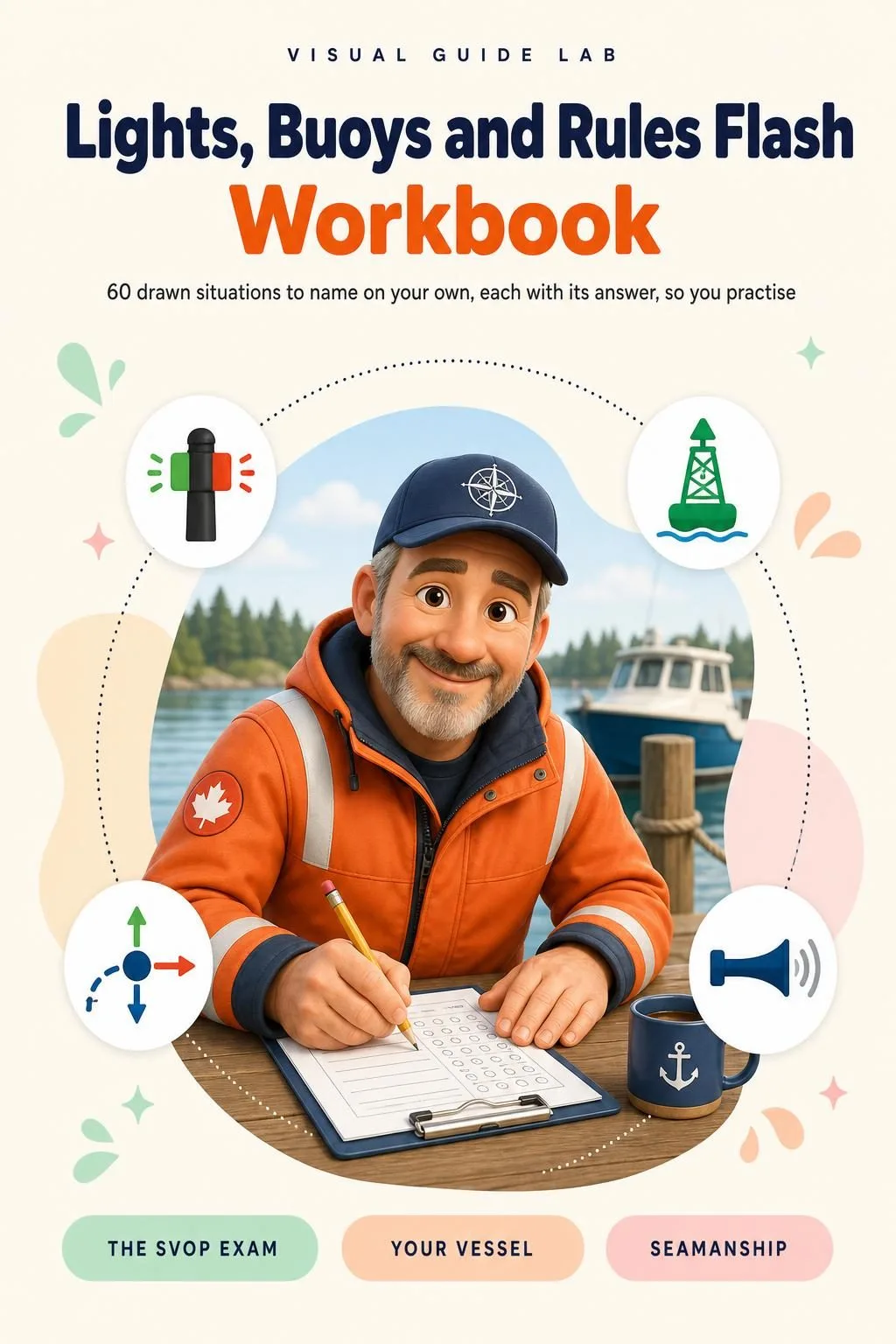
Lights, Buoys and Rules Flash Workbook

BONUS 1: «Lights, Buoys and Rules Flash Workbook»

Value on its own: CA$ 24.99

60 drawn situations to name on your own, each with its answer, so you practise until telling lights, buoys and give-way from stand-on takes one look.

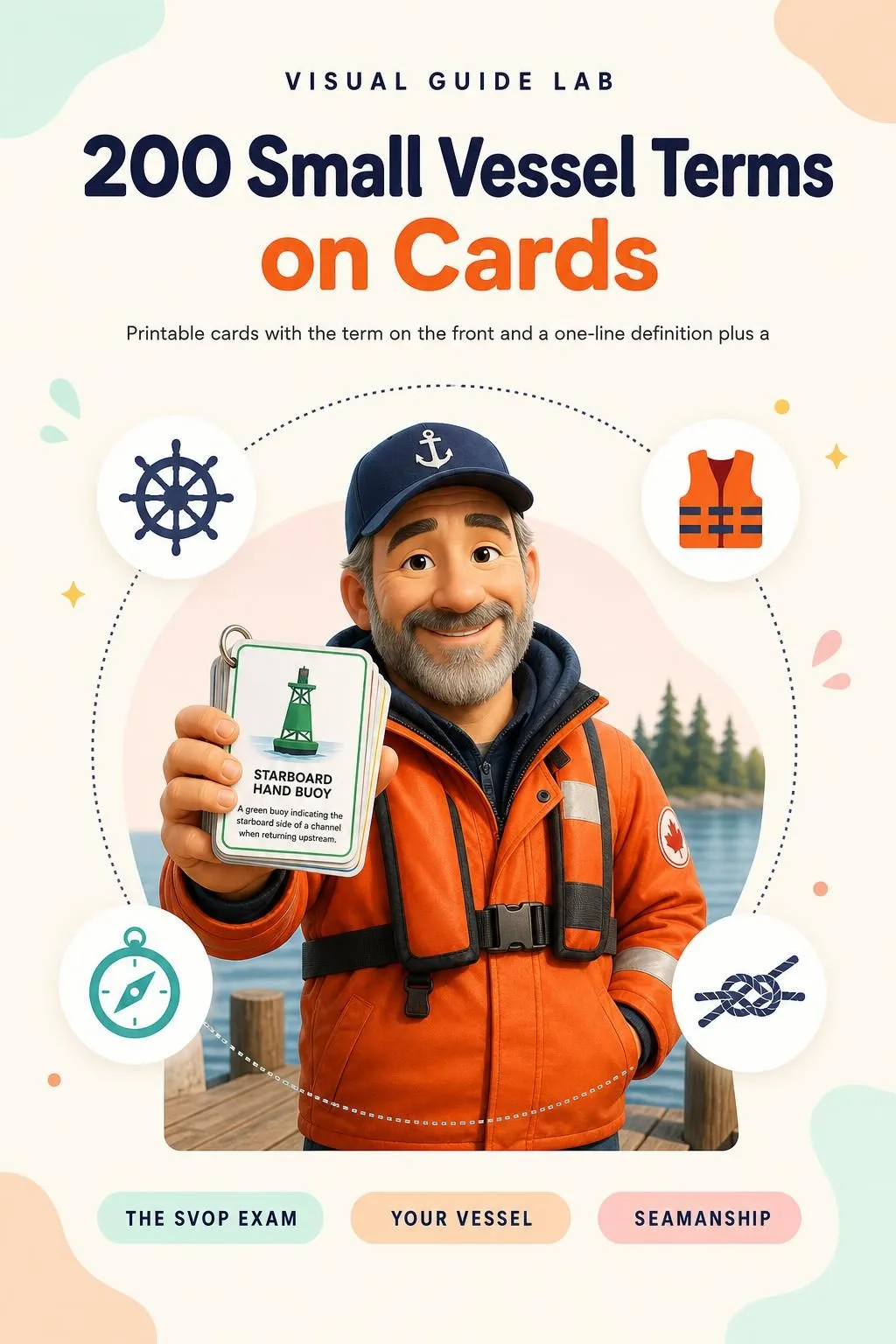
200 Small Vessel Terms on Cards

BONUS 2: «200 Small Vessel Terms on Cards»

Value on its own: CA$ 19.99

Printable cards with the term on the front and a one-line definition plus a small sketch on the back, so the vocabulary sticks for the course and for the boat.

The SVOP Sketchbook + 2 Free Books

  • The SVOP Sketchbook: 58 illustrated pagesCA$ 79.99
  • BONUS 1: Lights, Buoys and Rules Flash WorkbookCA$ 24.99
  • BONUS 2: 200 Small Vessel Terms on CardsCA$ 19.99
  • High-resolution PDF to printIncluded
Total value CA$ 124.97
YOUR PRICE:
CA$ 34.99
You save CA$ 89.98
YES, I WANT THE SVOP SKETCHBOOK FOR CA$ 34.99

📄 This is a digital PDF book sent to your email: nothing is printed or shipped.

Secure purchaseEncrypted payment30-day guarantee

PDF by email: The SVOP Sketchbook reaches your inbox as a PDF, and the two free books come by email too. One-time payment, no installments or hidden costs.

Is This Book for You?

You're taking the SVOP course

You're taking the SVOP course

Lights, rules, buoys and stability, one topic per page, to review between course sessions.

Your course exam is coming up

Your course exam is coming up

The whole syllabus in order, and at the end the frequent mix-ups side by side and an exam day checklist.
You already work on the water

You already work on the water

A quick drawn review of what you use every day: dock lines, anchoring, buoys, forecasts and radio calls.

To Sum Up: Here Is What You Get

CA$ 124.97CA$ 34.99
YES, I WANT THE SVOP SKETCHBOOK FOR CA$ 34.99

📄 This is a digital PDF book sent to your email: nothing is printed or shipped.

30DAYS
GUARANTEE

30-Day Guarantee

30-day guarantee: tell us what didn't work and we'll refund 100%.

You have 30 days to try The SVOP Sketchbook and the two bonus books. If it didn't help you with the course, if a file won't open or if something doesn't arrive, tell us what didn't work and we'll refund 100% of what you paid. One-time payment, no subscriptions, no surprises.

Frequently Asked Questions

How do I get the material?

You get The SVOP Sketchbook as a high-resolution PDF by email, at the address you enter at checkout. The two bonus books, Lights, Buoys and Rules Flash Workbook and 200 Small Vessel Terms on Cards, also come by email.

Is it a monthly or a one-time payment?

One-time payment of CA$34.99. Your card converts it to Canadian dollars at your bank's rate. No installments and no subscription.

Who is it for?

For anyone taking an approved SVOP course in Canada: fishing and hunting guides, water taxi and tour operators, work and research boat crews, small fishing vessel operators and marina staff. It works whether you're new to boats or have years at the helm. It follows Canadian rules only and is not for US licenses. Check the table of contents above to see every topic.

What sources is it based on?

On the Transport Canada SVOP course syllabus (TP 14692), the Collision Regulations with the Canadian modifications, the Canadian Aids to Navigation System, the Canada Shipping Act, 2001 and the Small Vessel Regulations. Canada only.

Is it official material?

No. It's an independent study companion. It is not affiliated with or endorsed by Transport Canada, ISED or any course provider.

Does it replace the SVOP course?

No. The approved course is mandatory and there is no stand-alone exam. The book helps you follow the course and review it. The ROC-M radio certificate is a separate certificate.

Are the practice situations the ones on the exam?

No. The 60 situations in the Flash Workbook are written for this book. They are not official exam questions: they're there for you to practice.

Can I print it?

Yes. You can read it on your phone or print it to keep on board. Every chart is redrawn and marked Not for navigation.

What if I don't like it?

30-day guarantee: tell us what didn't work and we'll refund 100%.

One Last Thing Before You Decide...

You don't have to reread the same page hoping it sticks this time.

You don't have to memorize rules you can't picture.

And you definitely don't have to walk into the exam not knowing where to start.

There's a simpler way. And it's one click away. Now it's your turn.

One-time payment: CA$ 34.99 · Guarantee: 30 days · PDF by email

YES, I WANT THE SVOP SKETCHBOOK FOR CA$ 34.99

📄 This is a digital PDF book sent to your email: nothing is printed or shipped.